DGRM / Projects / Stark
Copper · Silver · Coppermine District, Nunavut

Stark

A 7,500-hectare basalt-hosted copper project in an active Nunavut exploration belt — beside ground reporting high-grade copper, with geophysics indicating the favourable geology continues onto DGRM claims.

100% DGRM Owned 5 Claims 110 km from Kugluktuk Coppermine River Group
7,500 ha5 claims
up to 64% CuAdjacent high-grade rock
up to 24.1% CuNeighbouring Wanda district
~11 Blb CuKeweenaw analogue
01 — The opportunity

High-grade copper in an active belt.

Stark is a 7,500-hectare, 5-claim block located 110 km from Kugluktuk in north-western Nunavut, within an established mining region. The claims are 100% DGRM-owned and sit directly adjacent to White Cliff Minerals' Rae Cu-Ag project and Somerset Minerals' Coppermine project.

Adjacent properties report high-grade copper and silver — up to 64.02% Cu and 152 g/t Ag — and geophysical data indicates the favourable geology continues onto DGRM ground.
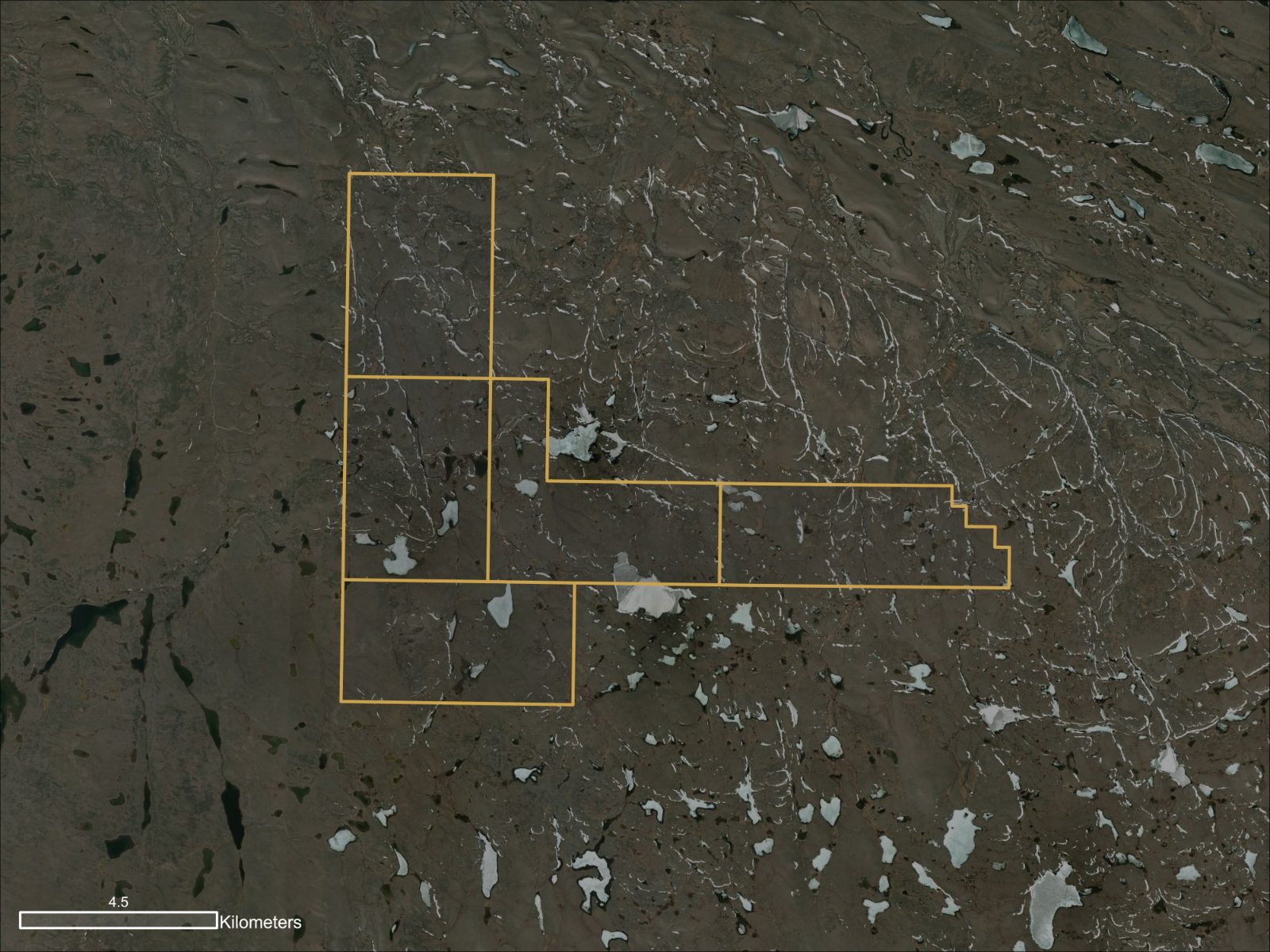
Stark claim boundaries on satellite imageryStark claims · Coppermine district, Nunavut
02 — Project history

Repeatedly targeted for copper — now overdue for modern exploration.

Early 1960s
Regional prospecting identifies copper occurrences across the area.
Late 1960s
Interest declines as the copper price falls and access remains difficult.
1992
Cominco conducts exploratory drilling, intersecting copper.
2010s
Tundra Copper Corp. stakes the region on historical results; Kaizen Discovery acquires Tundra and drills significant copper intercepts.
2020s
Durango Gold acquires Kaizen; White Cliff Minerals intercepts multiple high-grade vein systems and Somerset Minerals drilling finds large copper intercepts.
Present
Increasing accessibility and a string of nearby discoveries make the region highly desirable — historical showings are overdue for modern exploration.
03 — Deposit type

Fissure systems and flow-top copper.

Stark is hosted within Mesoproterozoic continental flood basalts of the Coppermine River Group, with mineralization developed primarily in the Copper Creek Formation — a 2–3.5 km thick basalt package.

Copper occurs as chalcocite, bornite and minor chalcopyrite in two styles: structurally controlled fissure systems along sub-vertical faults and breccia zones, locally yielding very high grades; and basalt flow-top replacement, where native copper and sulphides infill vesicular, brecciated flow tops — directly analogous to Michigan's Keweenaw Peninsula (~11 billion lb Cu).

Copper mineralization in basaltChalcocite · bornite · native copper
04 — Targets & geophysics

Government-recorded showings on a coherent magnetic framework.

05 — Strategy & timing

Modern techniques on high-confidence historical ground.

Stark

Request the full briefing.

We can share the complete Stark package — claim maps, adjacent-ground grades, geophysics and the proposed exploration program — with qualified partners and investors.


Get in touch Back to portfolio